

Table of Contents
What is a Time Relay?
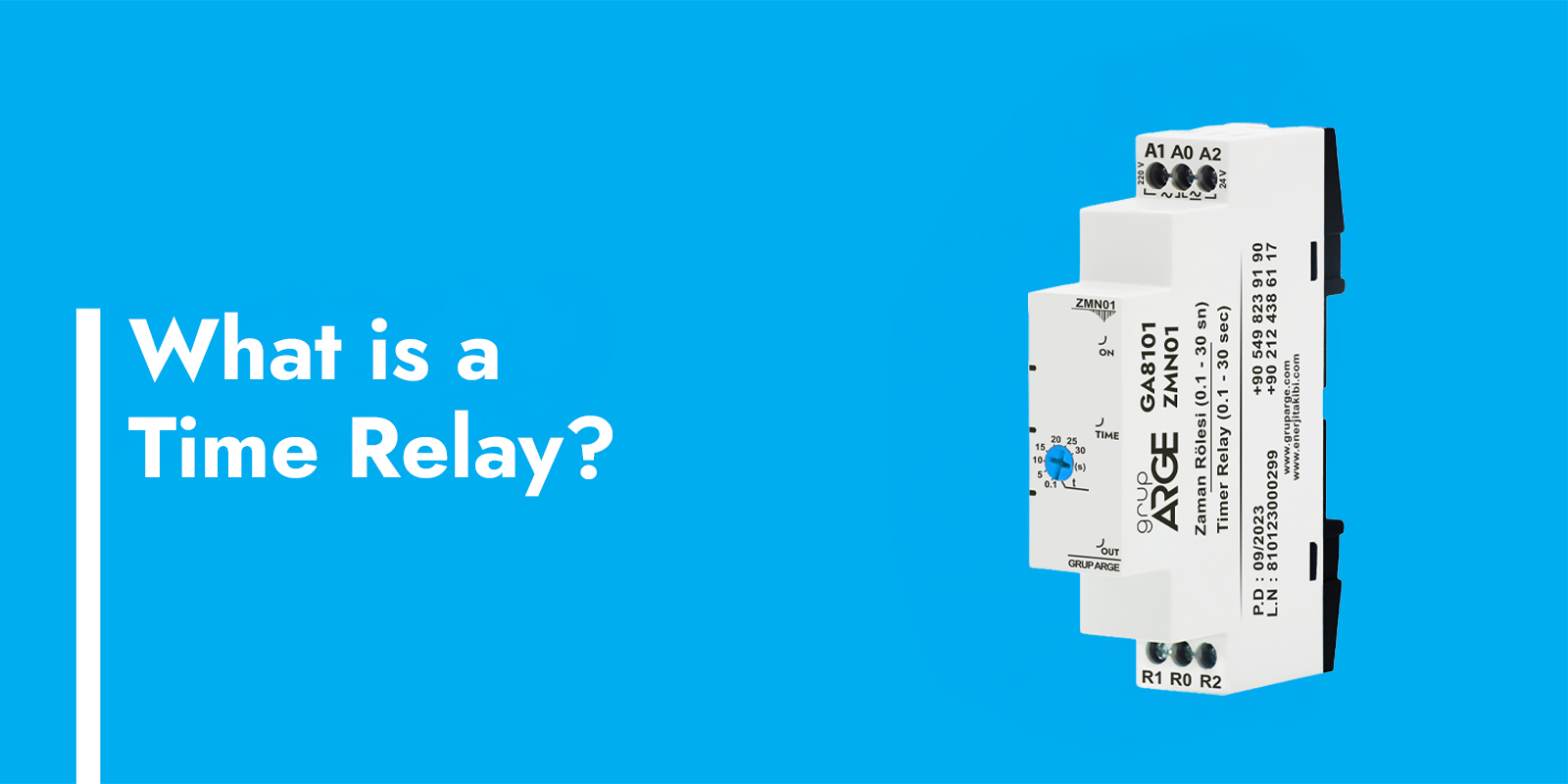
Time relays are microprocessor based control devices that activate the load connected to a device when needed, adjusting the contact control by time and function in facilities where time is critical. Usually used in automation systems and control panels of power circuits, time relays essentially control the systems by changing the relay positions either with or without delay.
There are potentiometers on a time relay that enables the user to adjust the time settings of the relay. These time settings range from milliseconds to hours, providing a wide range of time options. There are also LEDs that show the operating status of the relay.
How does a Time Relay Operate?
Time relays operate differently depending on their types.
There are different types of time relays depending on the time of change of the contacts. The relays can provide delayed or non-delayed contact changes in situations like applying energy to or cutting energy from coils. Besides these two cases, there are many different types of time relays with different working principles such as multifunctional, star-delta or flasher relays.
What are the different types of Time Relays?
On-Delay Timer Relays: These relays start counting down from the set time when a coil is energized, and changes the positions of the contacts when the set time expires. The closed contact opens, and the open contact closes. If the energy is cut before or after the set time expires, the relay disengages and the contacts come back to their default positions.
Off-Delay Timer Relays: These relays change the positions of contacts when a coil is energized. Closed contacts become open, and open contacts become closed. The contacts then hold their position as long as the relay stays energized. After the energy is cut, the relay changes the contacts back to their original position after the set time.
Star-Delta Time Relays: These time relays are used in star-delta activation of motors. Firstly, the contact connected to the star contactor closes when the relay is energized. After the set time expires, the closed contactor that energizes the star contactor opens and the contact that is connected to the delta contactor closes.
Flasher Time Relays: Just like in On-Delay and Off-Delay Timer Relays, Flasher Timer Relays also change contacts. When the supply voltage is given to the relay, the relay changes the contacts and provides an output until the set time expires. When the time expires, the contacts return to their original positions. The contacts then remain in their original positions until a second set time expires, and then the relay changes the position of the contacts again. This process continues until the power is cut.



Applications of Time Relays
There are many different applications of time relays. Here are some of the applications:
- Industrial Automation: Time relays are used to regulate the production processes and ensure cooperation in factories and industrial plants. They increase efficiency by activating and deactivating the machines.
- Illumination Control: Time Relays provide energy savings in illumination systems by opening and closing the lights in certain hours.
- Watering Systems: Time relays are used to time the watering times of plants in gardens and agriculture. They time the watering of plants, providing an efficient water use.
- Automotive Industry: Time relays are used to time different parts such as horns, windshield wipers and lights in automobiles and different vehicles.